Been told you can't have implants?
It is one of the most common things we hear, and very often it turns out not to be the whole picture.
Dr Brad on complex cases and how a plan is built around the individual. 2 min 44.
The bone loss misunderstanding
Patients come in all the time who have been told they have a lot of bone loss around their teeth, and have taken that to mean implants are off the table. There is a slight misunderstanding in that. You can lose bone around the teeth and still have perfectly usable bone elsewhere in the jaw to place implants into.
Rebuild, or take a different route
The question then becomes whether to rebuild the defect that is there, or whether sacrificing teeth that are already compromised gives a more streamlined approach and a better overall result — because it opens up the better quality bone elsewhere in the mouth.
There is no single right answer to that. It is taken case by case: each patient, each tooth involved, each gap, and what they are actually trying to achieve.
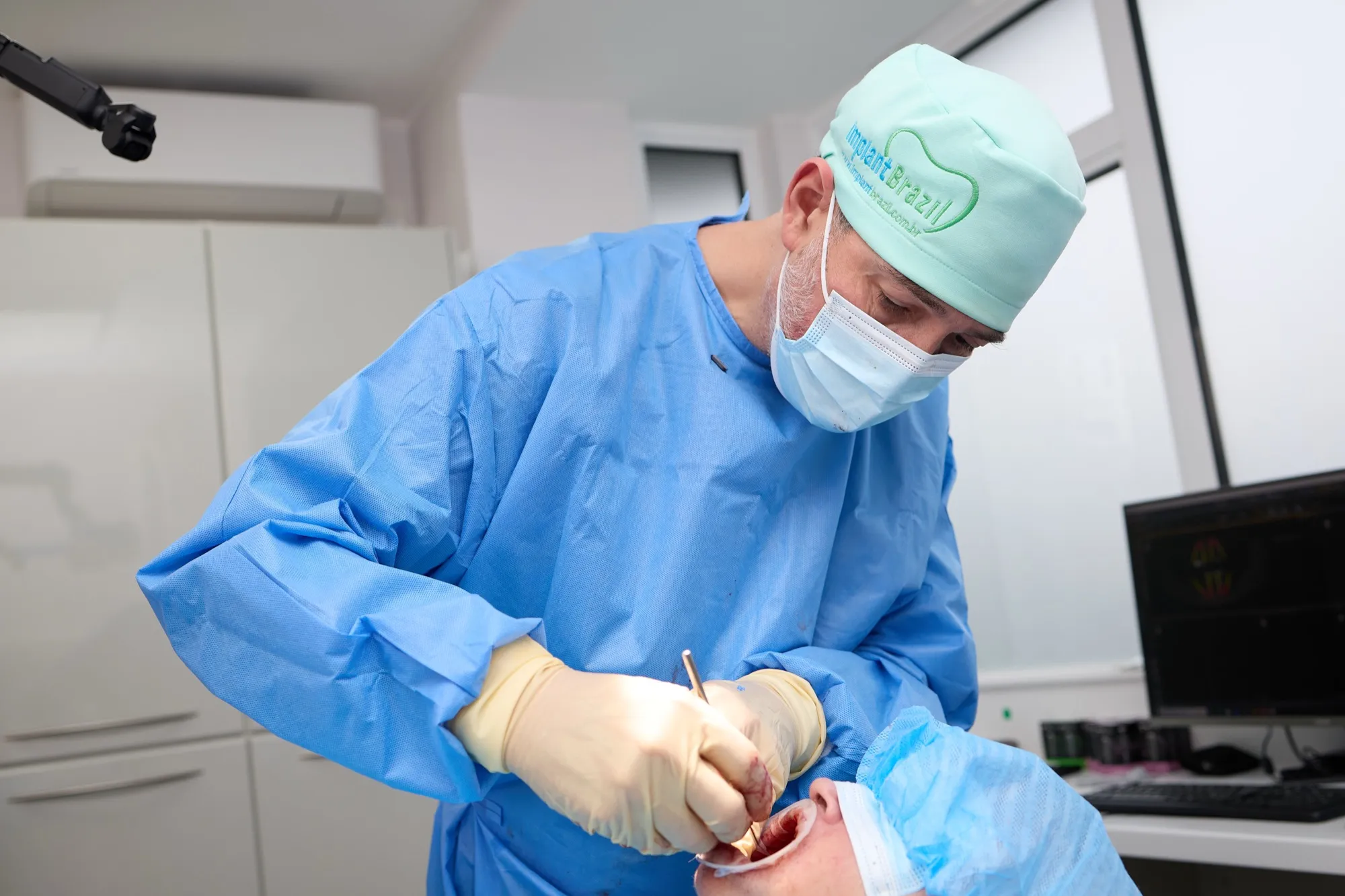
When bone really is limited
Some patients genuinely do have anatomical constraints — bone lost to gum disease, or teeth missing for so many years that the bone has slowly shrunk away. That is challenging, but there are ways around it.
Zygomatic and pterygoid implants anchor into bone away from the areas that have been lost, avoiding grafting altogether. Longer implants, additional implants and different implant designs can all be used to get enough stability on the day to still give a fixed set of teeth.
Function first, then cosmetics
Every case gets looked at from two points of view. First function: how much do you actually need back, and how many teeth? Then cosmetics: what shows when you smile, whether the remaining teeth want improving, and what has to come out.
That gives a baseline — where we are starting from and where we are trying to get to — and the plan is tailored from there. Whether grafting is involved depends on how much bone needs regenerating, where, and which technique is required. Some techniques cost more and take longer. Sometimes grafting can be avoided altogether by choosing a different type of implant, which streamlines the whole process.
Medical conditions or access issues can make complex treatment harder, and that may point towards a simpler, more predictable approach instead. Predictability matters more than ambition.
If you have been told no before
Come and have a conversation. Being told implants are not possible is not always the end of it, and it costs nothing to find out where you actually stand.
Find out where you actually stand.
Send a few details and you will hear back within one working day. Or call 07405 442072.
You will hear back within one working day. For anything urgent, please call 07405 442072.