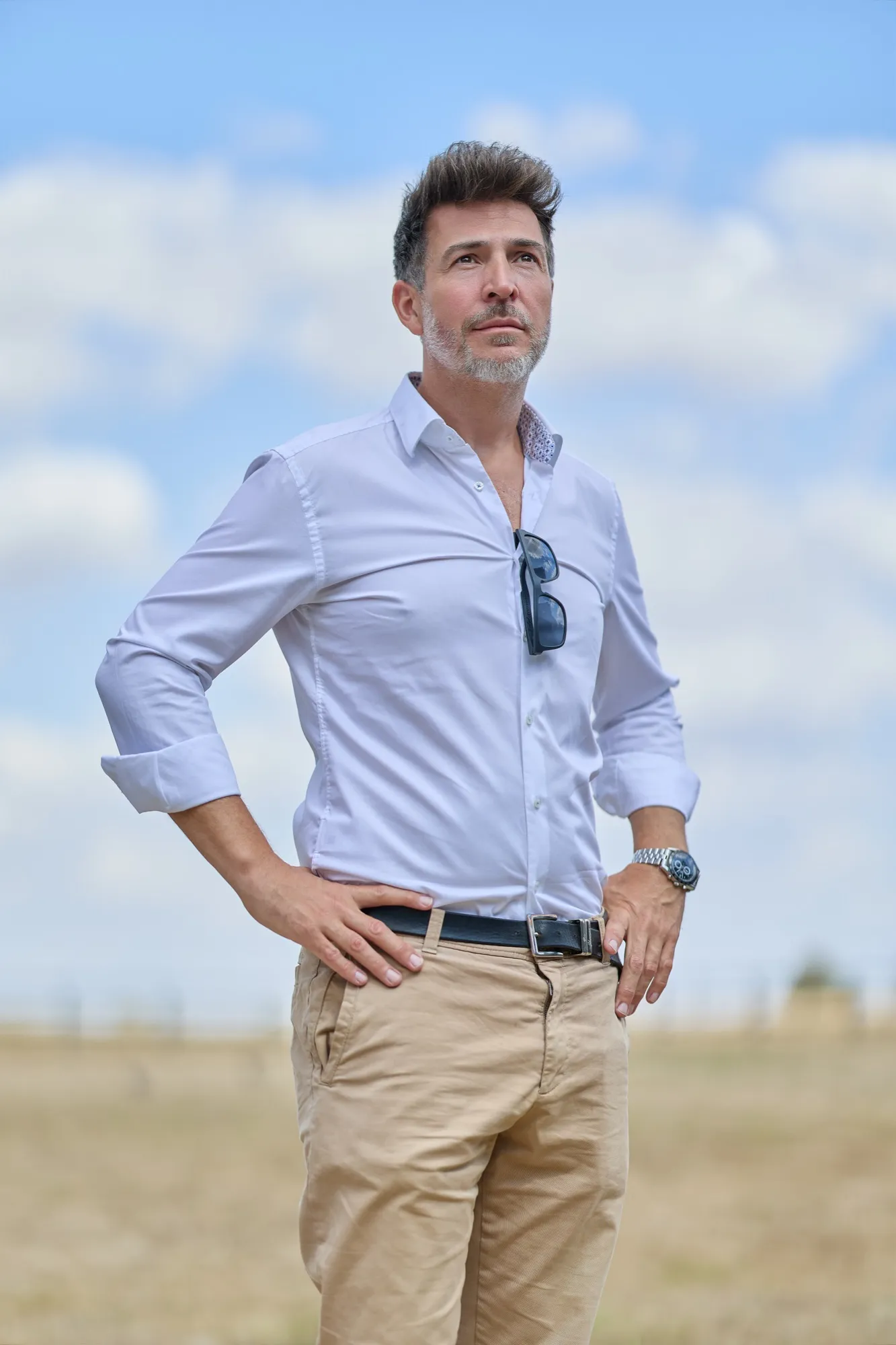
Care led personally, start to finish.
One surgeon, from your first consultation to your final review. That continuity is how implant dentistry should be — and it is the whole reason he works the way he does.
Dr Brad, in his own words. 2 min 25.
Dr Brad qualified at University of Birmingham in 2005, having first taken a BMedSc in Biomedical Materials Science — the science of what we put into the human body, which is a useful place to start for a career spent placing implants.
He has been placing implants since 2007 and completed an MSc in Restorative & Aesthetic Dentistry in 2015. Since 2009 he has mentored Foundation Dentists, and he lectured undergraduates between 2008 and 2014.
How he works
Unhurried assessments. Plain English before clinical terms. A written plan with a total cost before anything begins.
The part he considers most important is knowing when to say no. Nobody should feel pressured into treatment — the motivation for going ahead has to come from the patient, not from the surgeon. You will be given the full picture, the options and the honest pros and cons of each, and then it is your decision and your timescale.
Sometimes people arrive asking for a specific treatment that isn't right for them, often because it would mean removing far more healthy tooth than the problem warrants. In that situation the useful thing is not to sell it to them — it is to explain what is actually going on and what the sensible ways of dealing with it are. Budget, timescales and how many appointments you can realistically commit to are part of that conversation too, not an afterthought.
Every plan is built around the individual rather than pulled off a shelf, and that runs across the whole team — reception, treatment coordinator and surgeon — before, during and after treatment.
Full-arch work
Full-arch immediate implant treatment — giving someone back a fixed set of teeth in a single day — is the part of dentistry he cares most about. He has placed thousands of implants since 2007, and moved into full-arch work over roughly the last decade.
He has also travelled extensively to train internationally in the more specialised implants that make treatment possible where bone is lacking: pterygoid, transnasal and zygomatic. Those techniques are what allow stable implants, and a fixed set of teeth on the day, for people who have been told there is not enough bone to work with.
More on complex cases and what is possible when bone is limited →
Credentials
- MSc — Restorative & Aesthetic Dentistry, 2015
- BDS — University of Birmingham, 2005
- BMedSc — Biomedical Materials Science
- PGCertClinEd — Clinical Education
- GDC registration — 85988